Pathophysiological and Mechanical Implications When My Temporary Crown Fell Off
The clinical data repositories at Luxe Smile Studio continuously monitor the physiological disruptions associated with provisional restorative failures. In the precise discipline of prosthodontics, a provisional restoration serves as a biological bandage, safeguarding the meticulously prepared dentin and supporting periodontium while the definitive prosthesis is fabricated. When a patient reports that my temporary crown fell off, this event represents far more than a mere mechanical inconvenience; it initiates a cascade of rapid pathophysiological responses. Analyzing this failure requires a rigorous, evidence-based deconstruction of dentinal tubule fluid dynamics, pulpal nociception, and the immediate biomechanical shifts within the dental arch. This examination explores the precise biological mechanisms that become compromised the moment the provisional seal is breached.
Etiology of Retention Loss When My Temporary Crown Fell Off
The dislodgment of a provisional restoration is fundamentally a failure of the luting agent's shear and tensile strength. Dentists deliberately utilize temporary cements, frequently zinc oxide-eugenol or non-eugenol polycarboxylate variations, which possess low compressive strength and high solubility in oral fluids. These specific properties are engineered to allow the clinician to remove the provisional without damaging the underlying preparation during the final seating appointment. However, this intentional structural weakness renders the interface highly susceptible to masticatory shear forces.

When a patient frantically searches for "what do I do if my temporary crown falls off" the underlying clinical cause is typically the result of occlusal overload or the hydrolytic degradation of this weak cement layer. Salivary enzymes and routine temperature fluctuations in the oral cavity slowly dissolve the marginal seal. Once a micro-fracture occurs in the cement layer, hydraulic pressure during normal mastication forces fluid into the gap, rapidly accelerating the debonding process. The underlying convergence angle of the prepared tooth also plays a critical role; preparations with excessive taper lack the necessary geometric resistance and retention form, making the provisional highly reliant on the fragile cement, thereby mathematically increasing the probability of premature dislodgment.
Dentin Hypersensitivity and Pulpal Response After My Temporary Crown Fell Off
The immediate biological consequence of a lost provisional is the abrupt exposure of thousands of microscopic dentinal tubules to the harsh environment of the oral cavity. According to the hydrodynamic theory of pain, widely accepted in endodontic literature and recognized by organizations such as the ADA, these tubules contain fluid that is in direct communication with the vital pulp tissue.
When the protective acrylic layer is removed—the exact moment my temporary crown fell off—the exposed dentin is subjected to profound thermal, osmotic, and tactile stimuli. The consumption of cold water or sugar alters the fluid dynamics within these tubules, causing the fluid to contract or expand rapidly. This fluid movement mechanically deforms the mechanoreceptors located on the A-delta nerve fibers at the pulp-dentin junction, resulting in acute, sharp nociceptive signaling. Furthermore, the absence of the provisional crown allows oral flora to colonize the exposed dentin. Bacterial endotoxins can diffuse through the patent tubules, initiating localized pulpal inflammation. If left exposed for a prolonged duration, this reversible pulpitis can theoretically transition into an irreversible state, compromising the vitality of the tooth prior to the delivery of the definitive restoration.
Occlusal Migration and Arch Disruption
Beyond the immediate neurological response, the loss of a provisional restoration introduces significant biomechanical instability to the dental arch. The stomatognathic system exists in a state of dynamic equilibrium, where teeth maintain their precise spatial coordinates through constant, microscopic contact with adjacent and opposing dentition.
The removal of the provisional crown abruptly eliminates these proximal and occlusal contacts. Without these stabilizing forces, the physiological phenomenon known as mesial drift is accelerated. The adjacent teeth begin to migrate into the newly created void, while the opposing tooth in the opposite arch may begin to supra-erupt due to the lack of an occlusal antagonist. This microscopic migration can occur within a remarkably short timeframe. Consequently, when the clinician attempts to seat the definitive ceramic or metallic prosthesis, the margins may no longer align, and the interproximal contacts may be excessively tight or entirely unseatable, necessitating extensive chairside adjustments or a complete remaking of the final crown.
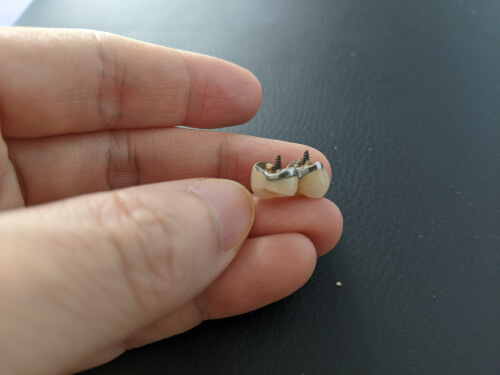
Clinically presenting as the common patient complaint, "my temporary crown fell off" the failure of a provisional restoration is a critical event that disrupts both the biological protection of the dental pulp and the mechanical stability of the dental arch. Understanding the exact pathophysiological mechanisms involving fluid dynamics, bacterial infiltration, and rapid occlusal migration underscores the necessity of maintaining the provisional seal. Such clinical events require prompt intervention to arrest the cascade of negative biological and spatial consequences.